
By Joni McMurchy, MSN, PMHNP-BC | Inner Compass Mind Health
When most people think about adult ADHD medication, they picture stimulants such as Adderall or Vyvanse. But what if stimulants aren't the right fit for you?
Perhaps you've experienced uncomfortable side effects, struggle with anxiety or sleep, have a history of substance use, or simply want to explore other treatment options.
The good news? There are effective non-stimulant ADHD medications for adults. And while supplements are often promoted as natural alternatives, the research tells a more complicated story.
At Inner Compass Mind Health, I believe ADHD treatment should begin with understanding the whole person—not simply choosing a medication.
Let's explore what actually works, what the research says, and how to make informed decisions about your ADHD care.
Why Choose a Non-Stimulant ADHD Medication?
Stimulants are often highly effective for ADHD, but they aren't the best choice for everyone.
Non-stimulant medications work through different pathways in the brain, helping regulate attention, impulse control, and executive functioning.
I like to describe some of these medications as a dimmer switch rather than a light switch. Instead of noticing an immediate change, improvements may develop gradually as the medication begins working.
A non-stimulant ADHD medication may be worth considering if you:
Have experienced bothersome side effects from stimulants.
Haven't received adequate improvement with stimulant treatment.
Have certain coexisting medical or psychiatric conditions.
Have concerns about medication misuse or controlled substances.
Prefer to explore a different approach to managing ADHD.
Importantly, having anxiety, sleep problems, or a history of substance use does not automatically rule out stimulants. Treatment decisions should always be individualized.
The goal isn't simply better concentration. It's improving how you function and feel throughout your daily life.
Before Medication: Why a Comprehensive Adult ADHD Evaluation Matters
Have you ever wondered whether your difficulty concentrating is really ADHD—or something else?
ADHD symptoms can overlap with several other conditions, including:
Anxiety and depression
Trauma-related symptoms
Sleep disorders
Thyroid conditions
Substance use disorders
Other medical or psychiatric conditions
This is why a thorough psychiatric evaluation matters.
At Inner Compass Mind Health, we explore your symptoms, medical and psychiatric history, daily functioning, and personal goals before recommending treatment.
A comprehensive adult ADHD assessment may include validated screening questionnaires, a detailed clinical interview, and, when appropriate, computerized assessment tools. No single questionnaire or computerized test can diagnose ADHD by itself.
An accurate diagnosis is the foundation of effective treatment.
The Main Non-Stimulant ADHD Medications for Adults
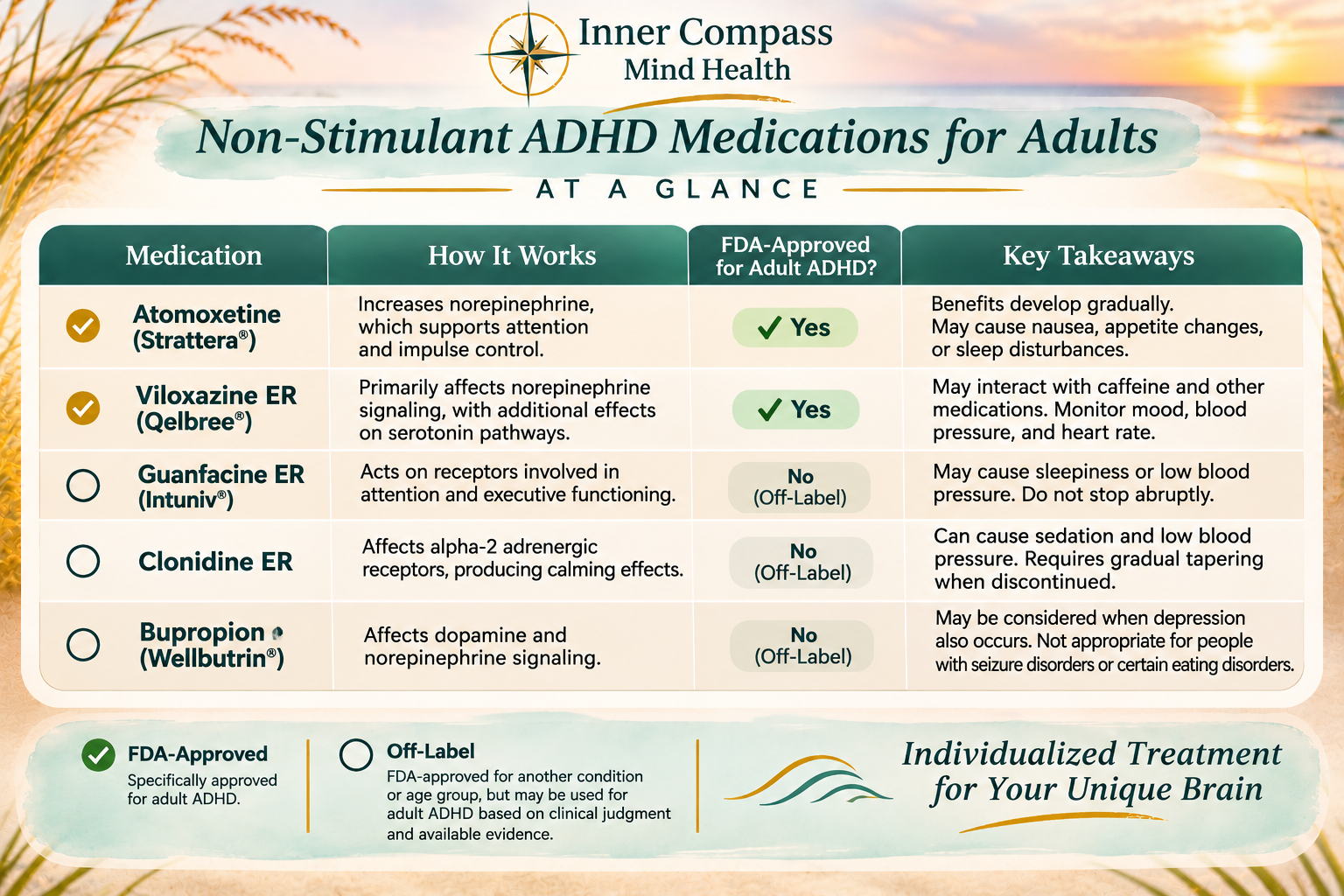
Two non-stimulant medications are FDA-approved specifically for adult ADHD: atomoxetine (Strattera) and viloxazine extended-release (Qelbree).
Other medications are sometimes prescribed off-label, meaning they are FDA-approved for another condition or age group but may be considered for adult ADHD based on clinical judgment and available evidence.
Here's a quick comparison of the options:
Which Non-Stimulant ADHD Medication Is Best?
There is no single best medication for everyone.
Some adults respond well to atomoxetine, while others may benefit from viloxazine or another carefully selected treatment. The strength of the evidence also varies among these medications.
Your symptoms, medical history, other medications, coexisting conditions, and personal preferences all influence the decision.
At Inner Compass Mind Health, the goal is not simply to prescribe a medication. It's to find a treatment approach that supports your ability to focus, function, and feel your best.
A comprehensive psychiatric evaluation helps determine which options may be appropriate for you.
Non-Stimulant vs. Stimulant ADHD Medication: What's the Difference?
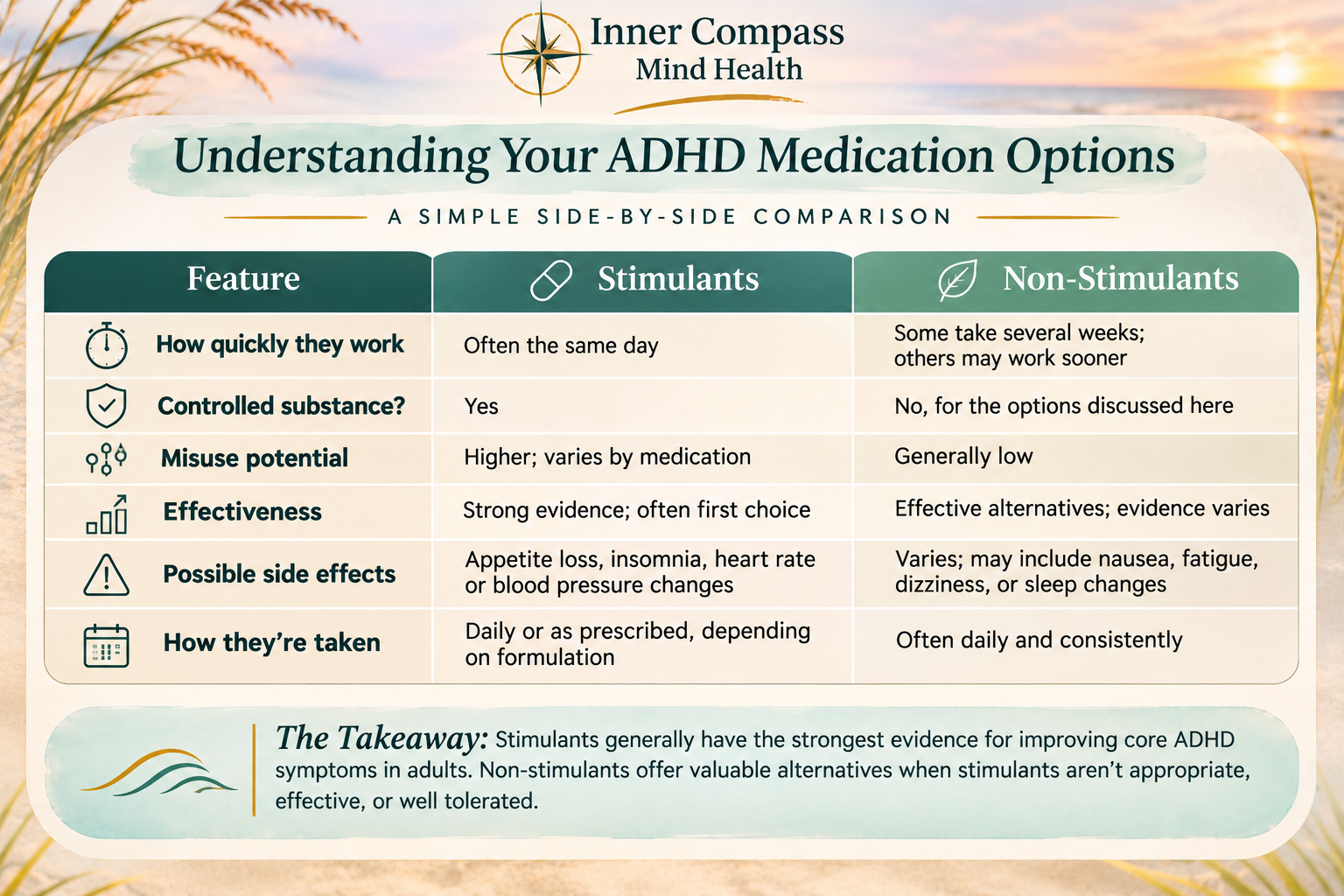
Both stimulant and non-stimulant medications can be effective, but they differ in several important ways.
Stimulants generally have the strongest evidence for reducing core ADHD symptoms in adults. However, non-stimulants provide meaningful alternatives for many patients.
The most effective treatment is one that balances symptom improvement, tolerability, safety, and your individual needs.
The best ADHD medication isn't necessarily the one that works fastest. It's the one that balances symptom improvement, safety, tolerability, and your individual needs.
At Inner Compass Mind Health, treatment begins with a comprehensive evaluation so we can explore the options that make the most sense for you.
How Long Does Non-Stimulant ADHD Medication Take to Work?
One of the most common questions I hear is:
"How will I know if the medication is working?"
The answer depends on the medication.
Atomoxetine often produces gradual improvement over several weeks, with additional benefits sometimes developing over a longer period. Viloxazine may show benefits earlier for some adults, while other medications have different response patterns.
Rather than expecting a dramatic overnight change, look for meaningful improvements such as:
Completing tasks with fewer interruptions.
Remembering appointments or responsibilities more consistently.
Feeling less overwhelmed by everyday demands.
Managing frustration more effectively.
Following through on plans and commitments.
I often encourage patients to pay attention to small functional changes, not just how focused they feel.
Sometimes the first sign of improvement is realizing that everyday life feels a little easier.
What About ADHD and Anxiety?
ADHD and anxiety frequently occur together, and their symptoms can overlap.
Anxiety can make concentration difficult, while untreated ADHD can create repeated experiences of missed deadlines, disorganization, and feeling overwhelmed.
Some adults wonder whether non-stimulants are automatically better when anxiety is present.
Not necessarily.
Medication selection depends on whether anxiety is a separate condition, a consequence of ADHD-related difficulties, or a combination of both.
A comprehensive evaluation can help clarify what needs treatment and which approach is most appropriate.
Side Effects and Safety: What Adults Should Know
All ADHD medications can cause side effects, including non-stimulants.
Depending on the medication, common side effects may include nausea, reduced appetite, dry mouth, fatigue, dizziness, sleep changes, or changes in blood pressure and heart rate.
Contact your prescribing provider promptly if you experience significant mood changes, fainting, palpitations, or other concerning symptoms.
Atomoxetine carries a boxed warning about suicidal ideation in children and adolescents. Viloxazine carries a boxed warning about suicidal thoughts and behaviors, with monitoring recommended across treated age groups.
Any new or worsening suicidal thoughts require immediate attention. In the United States, call or text 988 for crisis support, or call 911 if there is immediate danger.
Never discontinue guanfacine or clonidine abruptly without medical guidance.
Good medication management means monitoring both improvement and safety.
Can Natural Supplements Help Adult ADHD?
The supplement market is filled with products promising better focus, sharper memory, and improved mental clarity.
But do they actually work?
The evidence is much less convincing than many advertisements suggest.
No over-the-counter supplement is FDA-approved to treat ADHD, and supplements should not be considered equivalent to established ADHD treatments.
Much of the available research has also been conducted in children rather than adults.
Omega-3 Fish Oil: Mixed Evidence
Omega-3 fatty acids, particularly EPA and DHA, play important roles in brain health.
Some smaller studies have suggested modest ADHD-related benefits. However, a major 2023 Cochrane review found little evidence that omega-3 supplementation meaningfully improves core ADHD symptoms in children.
Evidence specifically supporting omega-3 supplements for adult ADHD remains insufficient.
Fish oil may still be appropriate for other nutritional or medical reasons, but it should not replace evidence-based ADHD treatment.
Broad-Spectrum Multinutrients: Interesting but Preliminary
Broad-spectrum multinutrient formulas combine multiple vitamins and minerals.
The MADDY trial found improvements in clinician-rated global functioning among some children receiving multinutrients compared with placebo.
However, improvements in overall functioning are not the same as proven improvement in core ADHD symptoms.
These findings are interesting but do not establish multinutrients as an effective treatment for adult ADHD.
Iron, Zinc, Vitamin D, and B12
Nutritional deficiencies can contribute to fatigue, concentration difficulties, and other symptoms that may overlap with ADHD.
Correcting a documented deficiency is important for general health and may improve related symptoms.
However, taking additional vitamins or minerals when levels are normal has not been established as an effective adult ADHD treatment.
Excessive supplementation can also be harmful, particularly with iron and certain fat-soluble vitamins.
Testing should be guided by your medical history, symptoms, and clinical assessment.
Magnesium, Ginkgo, and Other Supplements
You may have seen claims about magnesium, ginkgo biloba, pine bark extract, phosphatidylserine, or acetyl-L-carnitine.
At present, evidence supporting these products for adult ADHD is limited, inconsistent, or insufficient.
Supplements can also interact with prescription medications.
Natural does not automatically mean safe—or effective.
Before starting a supplement, discuss it with your healthcare provider.
Daily Habits That Support the Adult ADHD Brain
Medication is only one part of managing ADHD.
Your daily routines can influence energy, emotional well-being, and your ability to function effectively.
Some practical strategies include:
Move your body regularly. Walking, strength training, dancing, or other enjoyable physical activity supports overall brain health and may provide short-term benefits for attention and mood.
Protect your sleep. Inconsistent sleep can worsen concentration, emotional regulation, and executive functioning.
Eat balanced meals. A nutritious eating pattern supports general health and stable energy, although no specific diet has been proven to cure ADHD.
Create external structure. Calendars, reminders, written lists, and consistent routines can reduce the mental effort required to remember everyday responsibilities.
Consider therapy or ADHD-focused skills training. Cognitive behavioral therapy and practical organizational strategies can help adults manage procrastination, emotional distress, and daily challenges.
Small, sustainable changes often make more sense than attempting to overhaul your entire lifestyle at once.
Frequently Asked Questions About Non-Stimulant ADHD Treatment
What is the best non-stimulant ADHD medication for adults?
Atomoxetine and viloxazine extended-release are FDA-approved non-stimulant options for adults. The best choice depends on your symptoms, medical history, other medications, and treatment goals.
Are non-stimulant ADHD medications addictive?
The commonly prescribed non-stimulant ADHD medications discussed here are not controlled substances and generally have low misuse potential. However, they still require appropriate prescribing and monitoring.
Can I treat ADHD naturally without medication?
Some adults benefit from evidence-based non-medication approaches, including ADHD-focused cognitive behavioral therapy, organizational skills training, and lifestyle support. Supplements alone have not been established as effective treatment for core adult ADHD symptoms.
Is non-stimulant medication better for ADHD and anxiety?
Not automatically. The best treatment depends on the relationship between your ADHD symptoms and anxiety, as well as your overall health and treatment response.
Can I receive adult ADHD treatment online in Florida?
Yes. Inner Compass Mind Health offers psychiatric evaluations and individualized treatment for adults throughout Florida using secure telehealth.
Trusted Resources for Adults Living With ADHD
If you want to learn more about adult ADHD, I recommend exploring reliable, evidence-based resources.
CHADD — Children and Adults with Attention-Deficit/Hyperactivity Disorder
CHADD provides educational materials, support resources, and information about ADHD across the lifespan.
Visit: https://chadd.org
Other helpful resources include the National Institute of Mental Health and the Centers for Disease Control and Prevention.
Reliable information can help you become a more informed and confident participant in your treatment.
Finding Your Way Forward With Adult ADHD
Living with ADHD can sometimes feel like having too many thoughts competing for attention, too many unfinished tasks, or too many expectations pulling you in different directions.
But ADHD is not a character flaw, and struggling with attention or organization does not define who you are.
At Inner Compass Mind Health, I provide personalized psychiatric care for adults throughout Florida, combining evidence-based medication management with a whole-person perspective.
Whether you're exploring non-stimulant ADHD medication, wondering whether your symptoms are related to ADHD, or looking for a more individualized approach to treatment, the first step is understanding your needs.
Ready to Explore Your ADHD Treatment Options?
You don't have to figure everything out on your own.
Schedule your consultation with Inner Compass Mind Health to discuss your concerns, learn about the evaluation process, and explore your next steps.
You are the compass. Let's find your way forward.
References and Resources
1. U.S. National Library of Medicine. Strattera (atomoxetine): Official Prescribing Information.
Supports FDA-approved adult ADHD treatment, dosing, adverse effects, and safety warnings.
2. U.S. Food and Drug Administration. Qelbree (viloxazine extended-release): Prescribing Information.
Supports adult ADHD approval, medication interactions, and safety considerations.
View FDA prescribing information
3. National Institute of Mental Health. Attention-Deficit/Hyperactivity Disorder in Adults.
Supports adult ADHD symptoms, evaluation, and treatment approaches.
4. Gillies D, Leach MJ, Perez Algorta G. (2023). Polyunsaturated fatty acids (PUFA) for ADHD in children and adolescents. Cochrane Database of Systematic Reviews, 2023(4), CD007986.
Supports your discussion of omega-3 supplementation and the limitations of existing evidence.
5. Johnstone JM, et al. (2022). Micronutrients for Attention-Deficit/Hyperactivity Disorder in Youths: A Placebo-Controlled Randomized Clinical Trial. Journal of the American Academy of Child & Adolescent Psychiatry, 61(5), 647–661.
Supports your discussion of broad-spectrum multinutrients and the MADDY clinical trial.
6. CHADD — Children and Adults with Attention-Deficit/Hyperactivity Disorder. ADHD in Adults.
Provides patient-friendly education and support resources for adults with ADHD.
Medical Disclaimer
For Educational and Informational Purposes Only
The information provided in this article by Inner Compass Mind Health is intended for educational and informational purposes only. It is not intended to substitute for professional medical advice, diagnosis, or treatment.
ADHD medications, supplements, and treatment approaches should be discussed with a qualified healthcare professional who can evaluate your individual medical history, symptoms, and treatment needs. Medication effectiveness, potential side effects, and treatment responses vary from person to person.
Do not start, stop, or change any prescribed medication or supplement regimen without consulting your healthcare provider.
Reading this article does not establish a provider-patient relationship with Inner Compass Mind Health or Joni McMurchy, MSN, PMHNP-BC.
If you are experiencing a medical emergency, call 911 or seek immediate emergency medical attention.
